
Are you confused about the difference between gross margin and contribution margin? You’re not alone.
These two terms sound similar but tell you very different things about your business. Understanding how each one works can help you make smarter decisions and boost your profits. Keep reading, and you’ll discover simple ways to use these margins to get a clearer picture of your costs and earnings—no complicated math or jargon needed.
By the end, you’ll feel confident using these tools to improve your business strategy.
Gross Margin Basics
Gross margin is a key term in business finance. It shows how much money a company keeps from sales after paying for the goods sold. This amount helps businesses understand if they make enough profit to cover other costs.
Knowing gross margin basics helps you see how well a company controls its production costs. It also highlights the strength of the pricing strategy. Below are the main points to understand gross margin better.
Definition And Formula
Gross margin is the difference between sales revenue and the cost of goods sold. The formula is:
Gross Margin = Sales Revenue – Cost of Goods Sold
You can also express it as a percentage by dividing the result by sales revenue and multiplying by 100. This shows the profit made on each dollar of sales.
Components Included
Gross margin includes only direct costs related to making products. These costs cover materials and labor used in production. It does not include other expenses like marketing, rent, or taxes.
This focus helps businesses measure the efficiency of their production process. It isolates costs that vary directly with sales volume.
Purpose In Financial Analysis
Gross margin shows how profitable a product or service is before other expenses. It helps managers decide on pricing and production methods. Investors use it to compare companies within the same industry.
Tracking gross margin over time reveals trends in cost control and sales efficiency. A rising margin usually indicates better profit potential.
Contribution Margin Essentials
The contribution margin is a key number in business. It shows how much money is left from sales after paying variable costs. This money helps cover fixed costs and makes profit. Understanding contribution margin helps business owners make smart choices about pricing and production.
This section explains what contribution margin is, what parts make it up, and how it helps in decision making.
Definition And Formula
Contribution margin means the sales revenue minus variable costs. It tells how much money contributes to fixed costs and profit. The formula is simple:
Contribution Margin = Sales Revenue – Variable Costs
You can also express it as a ratio or percentage. This shows the portion of each sale that adds to fixed costs.
Components Included
Contribution margin includes sales revenue and variable costs only. Variable costs change with the number of products sold. Examples are materials, labor, and shipping. Fixed costs like rent and salaries are not part of contribution margin. These stay the same no matter how many items are sold.
Role In Decision Making
Contribution margin helps decide which products to sell. Products with higher contribution margin bring more profit. It also guides pricing decisions. Businesses can see how price changes affect profits. The margin helps plan production levels and control costs. It is vital for break-even analysis and profit planning.
Key Differences
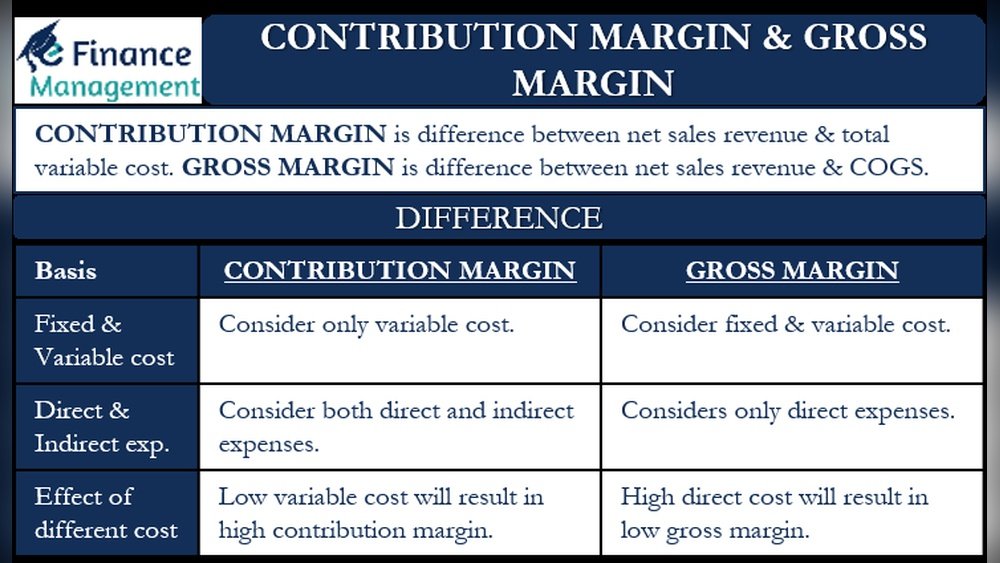
The key differences between gross margin and contribution margin lie in their calculation and purpose. Both margins help businesses understand profit, but they focus on different costs and insights. Knowing these differences can improve financial decisions and business planning.
Cost Elements Considered
Gross margin includes only the cost of goods sold. This means it covers direct costs like materials and labor.
Contribution margin considers variable costs. These include costs that change with production, such as materials, labor, and some expenses.
Fixed costs are excluded in contribution margin but affect gross margin indirectly.
Impact On Profitability
Gross margin shows how much money remains after direct costs. It helps measure product profitability.
Contribution margin shows how much money is left to cover fixed costs and profit. It helps assess the impact of sales on overall profit.
Contribution margin is useful for decisions about pricing and production levels.
Use Cases In Business
Gross margin is used to evaluate product pricing and cost control. It guides inventory and supplier choices.
Contribution margin is key for break-even analysis and profit planning. It helps decide which products to focus on or drop.
Both margins guide managers but serve different strategic roles.
Calculating Each Margin
Calculating gross margin and contribution margin helps businesses understand profit and costs. Both margins show different views of profitability. Gross margin focuses on product costs only. Contribution margin includes variable costs linked to sales. Knowing how to calculate each margin is important for clear financial insights.
Step-by-step Examples
To calculate gross margin, start with total sales revenue. Subtract the cost of goods sold (COGS). The result is gross profit. Divide gross profit by total sales. Multiply by 100 to get a percentage. For example, sales of $10,000 and COGS of $6,000 give a gross profit of $4,000. Gross margin is 40%.
For contribution margin, begin with sales revenue. Subtract all variable costs, including COGS and variable expenses. The result is contribution margin. Divide contribution margin by sales revenue. Multiply by 100 for the percentage. For example, sales of $10,000 and variable costs of $7,000 give a contribution margin of $3,000. Contribution margin is 30%.
Common Mistakes To Avoid
Mixing fixed costs with variable costs can confuse contribution margin. Only variable costs belong in contribution margin calculations. Using gross margin to analyze fixed costs leads to errors. Forgetting to convert margins into percentages reduces clarity. Not tracking all variable costs causes inaccurate results. Always check your numbers twice.
Implications For Pricing
Understanding the difference between gross margin and contribution margin helps in pricing decisions. Each margin highlights different cost aspects. This knowledge guides businesses to price products effectively. Pricing affects profit and market position. Clear insight into margins supports smarter pricing choices.
Setting Product Prices
Gross margin shows profit after direct costs of goods sold. Contribution margin reveals profit after variable costs. Variable costs change with sales volume, like materials or labor. Use contribution margin to set prices above variable costs. This ensures each sale adds to fixed costs and profit. Gross margin helps check overall profitability of products. Set prices high enough to cover total costs and earn profit.
Influence On Sales Strategy
Contribution margin helps decide which products to promote. Products with high contribution margin bring more profit per sale. Focus sales efforts on these products to boost profits. Gross margin gives a bigger picture of product success. Use it to plan long-term sales and inventory strategies. Both margins guide pricing and sales choices for steady growth.
Analyzing Financial Statements
Analyzing financial statements helps you understand a company’s health. It shows how well the business makes and spends money. Two important numbers to know are gross margin and contribution margin. These margins tell you about profits but in different ways. Understanding these helps you see where money is earned and spent.
Locating Margins In Reports
Gross margin appears in the income statement. It shows revenue minus the cost of goods sold. You find it near the top of the report. Contribution margin is not always directly listed. You calculate it by subtracting variable costs from sales. Look for details on variable costs in notes or expense sections.
Interpreting Variations
Gross margin shows profit after making products. It helps measure product pricing and cost control. Contribution margin focuses on profit after variable costs only. It helps decide how much each sale contributes to fixed costs and profit. Large differences between margins signal cost structure issues or pricing problems. Watch these numbers closely for better decisions.
Industry-specific Applications
Understanding gross margin and contribution margin helps businesses in different fields. Each industry uses these margins in ways that fit their operations. Knowing these differences improves decision-making and financial analysis.
Manufacturing
Manufacturers focus on gross margin to track production costs. It shows profit after direct costs like materials and labor. Contribution margin helps to see how each product adds to covering fixed costs. This margin guides pricing and product mix decisions.
Retail
Retailers use gross margin to measure profit from sales before overhead. It includes costs of goods sold like purchase price and shipping. Contribution margin highlights the profit per product after variable costs. Retailers use it to decide which products to promote or discount.
Service Sector
Service businesses rely more on contribution margin. They have fewer direct costs but many fixed costs. Contribution margin shows how much each service covers fixed expenses. Gross margin is less common but still used for services with material costs.
Frequently Asked Questions
What Is The Main Difference Between Gross Margin And Contribution Margin?
Gross margin shows profit after deducting cost of goods sold. Contribution margin reveals profit after subtracting variable costs only. Gross margin covers all production costs, while contribution margin focuses on costs that change with sales volume.
How Do Gross Margin And Contribution Margin Affect Pricing Decisions?
Gross margin helps set prices to cover total production costs and profit. Contribution margin aids in pricing to cover variable costs and contribute to fixed costs and profit. Both margins guide strategic pricing but target different cost structures.
Why Is Contribution Margin Important For Break-even Analysis?
Contribution margin indicates how much revenue exceeds variable costs per unit. It helps calculate the break-even point where total sales cover all fixed costs. This margin is essential to understand profitability and how sales volume impacts financial goals.
Can Gross Margin And Contribution Margin Be Used Together In Financial Analysis?
Yes, using both margins provides a complete view of profitability. Gross margin assesses overall production efficiency. Contribution margin highlights the impact of variable costs on profit. Together, they support better cost control and pricing strategies.
Conclusion
Gross margin shows how much money is left after making products. Contribution margin tells how much money covers fixed costs and profits. Both help businesses understand their costs and earnings. Knowing the difference helps make smarter money choices. Use these margins to check your business health.
Clear numbers guide better decisions. Keep these ideas in mind for your financial planning. Simple but powerful tools for any business owner.

About the Author
Oliver K.G.
Oliver K.G. has 8+ years in pricing strategy and has helped 200+ Amazon FBA sellers, dropshippers, and small business owners optimise their profit margins. He built BizMargin to make gross margin and pricing calculations instant and free. He writes on pricing strategy, gross margin optimisation, and profitability for e-commerce and retail businesses.