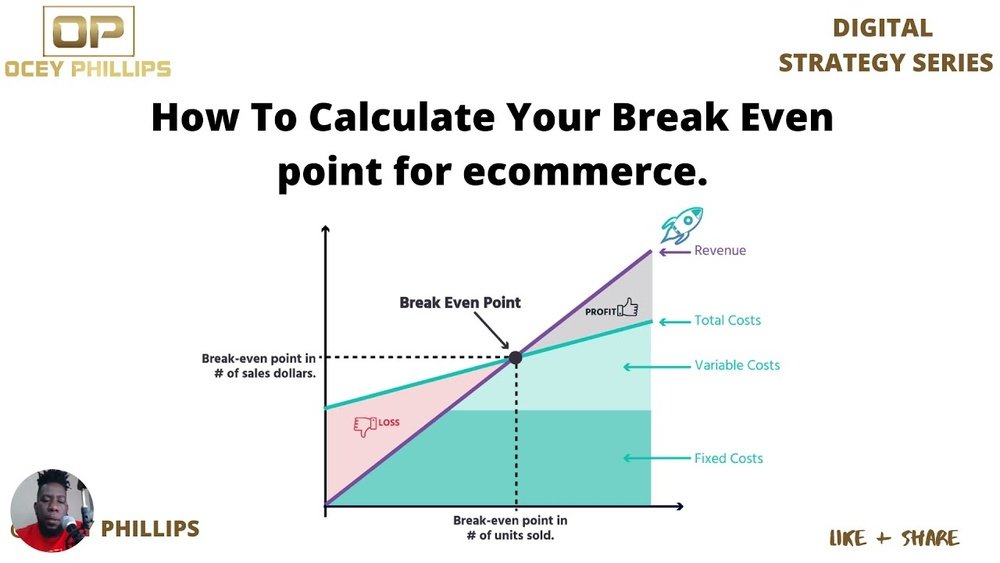
Starting an e-commerce business is exciting. But it can also be hard. One important thing to know is when your shop will start to make money. This point is called the break-even point.
Knowing the break-even point helps you plan better. It tells you how many products you must sell to cover your costs. After that, any sale is profit. This article explains the e-commerce break-even formula. You will learn how to use it and why it matters.
What is Break-Even Point?
The break-even point is when your income equals your costs. Imagine you spend money to buy or make products. You also pay for the website, shipping, and ads. Your break-even point is when your sales cover these costs.
Before break-even, you lose money. After break-even, you start to earn money. This is important for any business. Especially for e-commerce shops.
Why is Break-Even Important for E-Commerce?
- Helps plan sales goals: You know how many products to sell.
- Controls costs: You can see if costs are too high.
- Sets prices: Helps decide the right product price.
- Tracks progress: Shows if the business is growing.
Without knowing your break-even point, you might lose money without knowing. It keeps your business safe and smart.
Basic Terms You Need to Know
Before using the break-even formula, learn some simple words:
| Term | Meaning |
|---|---|
| Fixed Costs | Costs that stay the same every month, like rent or website fees. |
| Variable Costs | Costs that change with sales, like product cost or shipping per item. |
| Sales Price | The price you sell each product for. |
| Contribution Margin | Money left after paying variable costs per product. |
The E-Commerce Break-Even Formula
The break-even formula is easy. It tells you the number of products you must sell to cover costs.
Break-Even Point (units) = Fixed Costs ÷ (Sales Price – Variable Cost)
Let’s explain each part:
- Fixed Costs: Total monthly fixed expenses.
- Sales Price: Price per product.
- Variable Cost: Cost per product sold.
The difference between sales price and variable cost is called the contribution margin. It shows how much money each product adds to pay fixed costs.
Example of Break-Even Calculation
Imagine you run an online store selling coffee mugs.
- Fixed Costs: $1,000 (website, ads, storage)
- Sales Price: $20 per mug
- Variable Cost: $8 per mug (making, shipping)
Step 1: Find contribution margin:
Step 2: Calculate break-even units:
You must sell at least 84 mugs to break even. Selling less means a loss. Selling more means profit.
How to Use Break-Even Information
Once you know your break-even point, use it to:
- Set sales targets: Aim to sell more than break-even units.
- Price products right: If break-even is too high, consider raising prices.
- Reduce costs: Try to lower fixed or variable costs.
- Check business health: Track if sales reach break-even each month.
For example, if your break-even is too high, look for cheaper shipping. Or find cheaper suppliers. This lowers variable costs and break-even point.
Break-Even in Different E-Commerce Models
Not all e-commerce shops are the same. Break-even can be different.
Dropshipping
In dropshipping, you don’t keep products. You buy after customers order. So, variable costs include product price and shipping. Fixed costs may be website fees and ads.
Break-even point can be lower because you avoid storage costs.
Inventory-based Store
You buy and store products. Fixed costs include rent, storage, and website. Variable costs are product costs and shipping.
Break-even may be higher because of storage and inventory risks.
Subscription Box
You send products regularly. Fixed costs include packaging, website, and marketing. Variable costs are products inside the box and shipping.
Break-even calculation helps decide the box price and how many subscribers you need.
Tips to Lower Your Break-Even Point
A low break-even point means less risk. Here are some tips:
- Cut fixed costs: Use cheaper hosting or ads.
- Lower variable costs: Find cheaper suppliers or shipping.
- Increase sales price: Add value to justify higher price.
- Sell more products: Use marketing to get more customers.
Small changes can make a big difference.
Break-Even and Profit Planning
Break-even is just the start. After break-even, you want profit.
Use this formula to find profit goals:
Sales Needed = (Fixed Costs + Desired Profit) ÷ Contribution Margin
For example, if you want $500 profit:
Sales Needed = ($1,000 + $500) ÷ $12 = 125 mugs
You must sell 125 mugs to earn $500 profit.
Common Mistakes to Avoid
- Ignoring all costs. Include every cost for accuracy.
- Using wrong prices. Use actual sales price after discounts.
- Not updating costs. Costs can change monthly.
- Ignoring variable costs. They affect contribution margin a lot.
Always check your numbers regularly.
Summary
The e-commerce break-even formula helps you understand business health. It shows how many products to sell to cover costs. After break-even, you make a profit.
Remember these points:
- Know your fixed and variable costs.
- Calculate contribution margin correctly.
- Use the break-even formula to find sales needed.
- Use break-even to plan prices and sales goals.
- Reduce costs and raise prices if needed.
With this knowledge, you can run your e-commerce shop smarter. Keep track of your numbers. Make changes to improve profits. Your business will be stronger every day.
Start today. Calculate your break-even point. See your shop’s path to success.
Frequently Asked Questions
What Is The E-commerce Break-even Formula?
The break-even formula calculates when total sales cover total costs. It helps businesses know the sales amount needed to avoid losses.
Why Is Break-even Analysis Important For E-commerce Stores?
Break-even analysis shows when a store starts making profit. It helps plan pricing, costs, and sales goals clearly.
How Do Fixed And Variable Costs Affect Break-even Point?
Fixed costs stay the same, like rent. Variable costs change with sales, like shipping. Both impact the break-even sales number.
How To Calculate Break-even Sales In E-commerce?
Divide fixed costs by (price per unit minus variable cost per unit). This gives the number of sales needed to break even.
Can Break-even Formula Help In Pricing E-commerce Products?
Yes, it guides setting prices that cover costs and reach profit targets. Pricing too low or high affects break-even and sales.
How Often Should E-commerce Businesses Recalculate Break-even Point?
Recalculate when costs or prices change significantly. Regular checks keep business goals accurate and help adjust strategies fast.

About the Author
Oliver K.G.
Oliver K.G. has 8+ years in pricing strategy and has helped 200+ Amazon FBA sellers, dropshippers, and small business owners optimise their profit margins. He built BizMargin to make gross margin and pricing calculations instant and free. He writes on pricing strategy, gross margin optimisation, and profitability for e-commerce and retail businesses.