Why Your Pricing Strategy Might Be Costing You Thousands in Lost Profit
Most small business owners never realize they’re leaving money on the table until it’s too late. The problem isn’t always that you’re not selling enough—it’s that you don’t know your true profit margins. When you’re flying blind on pricing and costs, you can’t make decisions that actually move the needle on profitability.
According to McKinsey, a 1% improvement in price results in an average 11% improvement in operating profit. That’s not a rounding error. That’s the difference between barely surviving and actually scaling your business.
What You’ll Learn (TL;DR)
- The three pricing mistakes that are silently destroying your margins—and how to fix them in under an hour
- A step-by-step system to audit your costs and identify $5,000+ in annual savings
- How to use real data to raise prices without losing customers or damaging your brand
Master These 4 Strategies to Reclaim Your Profit Margin
Strategy 1: Stop Guessing at Your Actual Margins—Measure Them Weekly
Most small business owners calculate their margins once a year, if at all. That’s like checking your car’s tire pressure only in December and hoping it holds until November.
According to SCORE, businesses that track gross margin weekly are 2.3 times more likely to hit annual profit targets. Weekly tracking doesn’t mean obsessing over numbers—it means building a simple system that tells you, every Monday morning, whether your margins are where they should be.
When you measure weekly, you catch problems early. A supplier’s price increase, an unexpected spike in shipping costs, or a customer segment that’s ordering lower-margin products—all of these become visible before they blow a hole in your annual forecast.
Strategy 2: Use Keystone Pricing to Double Your Floor Margin
Keystone pricing is simple: mark up your cost of goods sold (COGS) by 100%. If a product costs you $10, you sell it for $20. This creates a 50% gross margin.
According to the National Retail Federation, retailers using keystone pricing earn double the industry floor margin. For context, average retail gross margins sit between 25% and 35%—keystone pricing gets you to 50% and above.
The catch? You can’t use keystone pricing on every product. Use it strategically: apply it to your best-selling items, your private label products, or categories where you face less direct competition. On commoditized products where customers compare prices, you may need to be more flexible.
Strategy 3: Cut COGS by 5% and Watch Your Margin Jump 8 Points
According to Deloitte, a 5% reduction in cost of goods sold increases gross margin by an average of 8 percentage points. That’s leverage. That’s profit amplification.
This isn’t about squeezing suppliers until they hate you. It’s about being strategic:
- Consolidate your supplier count. Buy more from fewer vendors to unlock volume discounts.
- Negotiate payment terms. Asking for net-60 instead of net-30 improves your cash flow and gives you leverage.
- Audit your packaging and shipping materials. Small reductions here compound across thousands of units.
- Consider private label or white-label alternatives if you’re in e-commerce or dropshipping.
Even small wins add up. A 5% COGS reduction on a $100,000 annual revenue business nets you an extra $5,000 in gross profit annually.
Strategy 4: Know Your Break-Even Point—And Build a Cushion
According to SCORE, 60% of small business owners have never calculated their break-even point. That means most business owners don’t actually know how many units they need to sell to cover fixed costs.
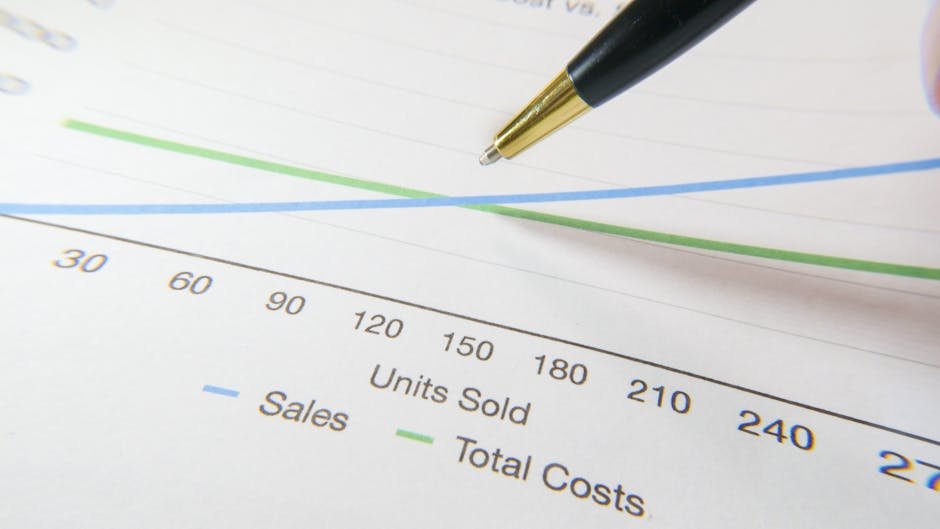
Your break-even point is the moment where revenue equals total expenses (COGS plus overhead). Once you know this number, you can price with confidence. You know exactly how much room you have to negotiate, discount, or invest in marketing.
Here’s the formula: Break-Even Units = Fixed Costs ÷ (Price per Unit – Variable Cost per Unit). If your fixed monthly costs are $5,000, your price is $50, and your variable cost is $20, you need to sell 167 units per month to break even. Everything above that is profit.
Calculate Your Profit Margin in 5 Minutes—Free
You don’t need accounting software or an MBA to understand your margins. BizMargin makes it simple.
- Step 1: Gather Your Numbers — You’ll need your cost of goods sold (what you paid to acquire the product), your selling price, and any fees (Shopify, Amazon FBA, payment processing). Start your free margin calculation here
- Step 2: Input Your Product Details — Enter the cost and price for one product. BizMargin automatically calculates your gross margin, net margin after fees, and profit per unit sold.
- Step 3: See Your True Profit — Many e-commerce sellers are shocked when they see their net margin after all fees. This is reality. Amazon FBA sellers often discover they’re profiting far less than they thought.
- Step 4: Test Pricing Scenarios — Adjust your price up by 5%, 10%, or 15% and watch your profit per unit grow. This is where you’ll find your pricing sweet spot without leaving money on the table.
The entire process takes less than five minutes. And it gives you the clarity you need to make pricing decisions that stick.
Mini Case Study: How Natasha Torres Recovered $18,000 in Hidden Profit
Natasha Torres owns a Shopify store selling premium kitchen gadgets and cookware. Her revenue was solid—around $45,000 per month—but her net profit was stuck at 8%. She assumed that was just “how it works” in e-commerce.
When she used BizMargin to audit her margins product-by-product, she discovered something troubling: three of her top 10 sellers had gross margins under 20%. After Shopify fees, payment processing, and shipping, she was netting less than 5% on those items.
She made three changes. First, she raised prices on those three products by 8% each. Second, she renegotiated her supplier contract and cut COGS by 4%. Third, she bundled a low-margin product with a high-margin one, improving the overall basket margin.
Within two months, her net margin climbed from 8% to 14%. On $45,000 in monthly revenue, that’s an extra $2,700 in monthly profit—or $32,400 annually. She didn’t need to double her sales. She just needed to understand her margins. For a deeper dive into this type of margin recovery, check out our guide on how to stop losing money to hidden margin leaks.
Common Mistakes to Avoid
Mistake 1: Forgetting to Factor in All Fees — Amazon sellers often calculate gross margin (price minus COGS) and call it a day. But FBA fees, referral fees, and payment processing cut your net margin in half. Always calculate net margin, not just gross.
Mistake 2: Using Charm Pricing Without Understanding the Trade-Off — A MIT study found that charm pricing (pricing at $9.99 instead of $10) increases conversion by 24% but reduces perceived quality by 11%. It works for commodity products. It backfires on premium
Oliver K.G — Founder, BizMargin
Oliver is the founder of BizMargin.com, a free profit margin calculator for retailers, e-commerce sellers, and small business owners. He writes on pricing strategy, margin optimisation, and business finance.

About the Author
Oliver K.G.
Oliver K.G. has 8+ years in pricing strategy and has helped 200+ Amazon FBA sellers, dropshippers, and small business owners optimise their profit margins. He built BizMargin to make gross margin and pricing calculations instant and free. He writes on pricing strategy, gross margin optimisation, and profitability for e-commerce and retail businesses.