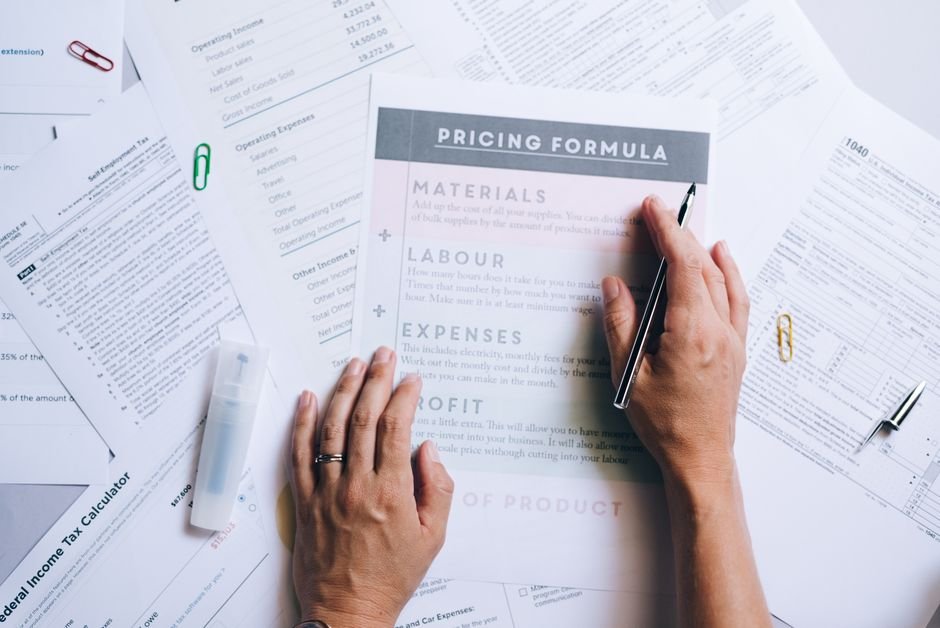
How to Stop Underpricing Your Products and Leave Money on the Table
You’ve built something valuable. Your customers love what you sell. But at the end of each month, you’re shocked at how little actually stays in your bank account. The problem isn’t your sales volume—it’s that your prices aren’t aligned with your true costs.
This is more common than you think. According to SCORE’s 2024 small business analysis, 60% of small business owners have never calculated their break-even point. Without knowing where you break even, you’re flying blind on pricing.
TL;DR — What You’ll Learn
- The exact formula to calculate what your prices should be based on your costs
- How to audit your hidden costs that are silently killing your margins
- Three pricing levers you can pull immediately to increase profitability without losing customers
The Real Cost of Underpricing
Let’s say you’re running a Shopify store selling home goods. You buy inventory for $15 per unit and sell it for $29.99. On the surface, that looks like a solid $14.99 margin per unit—a 50% gross margin. But then you factor in:
- Shopify subscription: $29–$299/month
- Payment processing: 2.9% + 30¢ per transaction
- Shipping costs (you absorb some)
- Returns and refunds (industry average: 16%–25%)
- Packaging and labor
Suddenly, that 50% gross margin drops to 22% net margin. At this rate, you’re not generating enough profit to reinvest in growth or weather slow months.
According to McKinsey research, a 1% improvement in price results in an average 11% improvement in operating profit. A small price adjustment isn’t reckless—it’s strategic.
Strategy 1: Conduct a Complete Cost Audit
You can’t price strategically if you don’t know your true costs. Most business owners only account for the direct cost of goods sold (COGS) and miss the operational overhead that eats into profit.
Start by listing every cost category:
- Direct costs: product purchase, manufacturing, raw materials
- Fulfillment: shipping, packaging, handling, warehouse labor
- Platform and payment processing: Shopify, WooCommerce, Stripe fees, currency conversion
- Marketing: Facebook ads, email tools, SEO, content creation (often forgotten)
- Customer service: support staff, returns processing, refund costs
- Overhead: web hosting, software subscriptions, accounting, legal
For e-commerce sellers on Amazon FBA, this is especially critical. According to Jungle Scout’s 2025 State of the Seller report, the average Amazon FBA seller operates with a 20–30% gross margin before fees, but that margin collapses to just 10–20% after FBA fees are applied. If you’re not accounting for the full cost structure, you’re pricing below profitability.
Use a simple spreadsheet or accounting software to track these costs monthly. Calculate them as a percentage of revenue so you can see which cost categories are eating the most profit.
Strategy 2: Recalculate Your Target Margin Based on Industry Benchmarks
Different industries have wildly different margin targets. According to NYU Stern’s 2024 analysis of profit margins by sector:
- SaaS: 72% gross margin
- E-commerce: 42% gross margin
- Retail: 25–35% gross margin
- Manufacturing: 20–35% gross margin
- Restaurants: 65–70% (with food costs at 28–35%)
If you’re running an e-commerce store and your gross margin is sitting at 25%, you’re underperforming the industry standard by 17 percentage points. That’s a signal to either raise prices or reduce COGS.
Here’s the framework: take your annual revenue, subtract your total costs, and divide by revenue. If that number is below your industry benchmark, price adjustments are necessary.
For high-ticket dropshipping operations, margins of 25–40% are typical and achievable, according to Oberlo’s 2024 data. If you’re in that space and running at 15%, your pricing strategy needs an overhaul.
Strategy 3: Implement a Three-Tier Pricing Adjustment Plan
Raising prices all at once can spook customers. Instead, roll out increases strategically across three phases.
Phase 1: Segment Your Product Catalog (Week 1)
Identify your high-margin winners, your breakeven products, and your loss leaders. Raise prices immediately on high-demand, low-competition items where customers are less price-sensitive. Leave your breakeven products alone for now.
Phase 2: Add Value Before Raising Price (Weeks 2–3)
Bundle complementary products, offer extended warranties, or include free shipping over a higher order threshold. This gives customers a reason to accept a higher price tag because they’re receiving more perceived value. When customers see bundled offerings, they’re less likely to price-shop individual items.
Phase 3: Implement Tiered Pricing (Weeks 4–6)
Introduce economy, standard, and premium versions of your product or service. The premium tier has a 20–30% higher price but includes extras like faster shipping, priority support, or exclusive add-ons. Customers self-select into the right tier, and your average order value increases.
Use BizMargin in 5 Minutes — Free
You don’t need to hire a bookkeeper to calculate your true margins. BizMargin is a free, no-signup-required calculator designed for exactly this purpose.
- Step 1: Go to BizMargin.com and select your business type (e-commerce, retail, dropshipping, or FBA seller). The tool auto-populates industry-average costs to save you time.
- Step 2: Enter your product cost, selling price, and any additional expenses (packaging, payment processing %, shipping absorbed). Calculate your margin free here.
- Step 3: The calculator instantly shows your gross margin, net margin, and break-even point. It also flags if you’re below industry benchmarks so you know exactly where you stand.
- Step 4: Use the pricing simulator to test different price points. See how a $2, $5, or $10 increase affects your net profit without guessing. Most users find they can raise prices by 8–15% without losing customers.
The entire process takes under five minutes and requires no email signup or credit card. You’ll walk away with concrete numbers to act on.
Mini Case Study: How Marcus Increased His Margin from 18% to 34%
Marcus Okafor, owner of a men’s apparel Shopify store in Atlanta, was selling t-shirts for $34.99 with a $12 COGS. His gross margin was solid at 65%, but after accounting for Shopify fees (2%), payment processing (3%), packaging ($1.50 per shirt), and warehouse labor, his actual net margin was only 18%.
He wasn’t sure if he could raise prices without losing customers, so he ran an experiment. He raised prices on his top-selling colorways from $34.99 to $39.99 and bundled free shipping with orders over $75. He also introduced a premium “premium fit” version priced at $49.99 with upgraded fabric.
Six weeks later, his average transaction value increased from $52 to $78. His unit sales dropped by only 8%, but his net profit jumped from 18% to 34%—a $47,000 swing in annual profit on the same monthly revenue. He didn’t need to sell more; he needed to sell smarter.
Common Mistakes to Avoid
Mistake 1: Only Looking at COGS
Your cost of goods sold is only one piece of the puzzle. Operational overhead, payment processing, and returns are just as important to factor in. Ignore them and you’ll underprice systematically.
Mistake 2: Matching Competitor Prices Without Understanding Your Cost Structure
Your competitor might have lower overhead costs, bulk purchasing power, or a different supply chain. Matching their price doesn’t mean matching their profitability. Price based on your costs, not theirs.
Mistake 3: Raising Prices Across the Board Without Testing
A 20% price increase on every product is risky. Test increases on different segments first. High-demand, low-competition items can absorb larger increases without losing volume.
Mistake 4: Forgetting That Even Small Increases Compound
Increasing prices by 5% seems tiny. But according to Deloitte’s 2024 research, a 5% reduction in COGS increases gross margin by an average of 8 percentage points. The same leverage applies to price increases, especially at scale.
The Bottom Line: Price With Confidence
Underpricing isn’t a virtue—it’s a slow burn. According to U.S. Bank research, 82% of businesses that fail do so because of cash flow problems, not lack of profitability. Healthy pricing generates the cash flow you need to survive downturns and invest in growth.
You’ve already done the hard work of building a product people want. Don’t leave money on the table by guessing at prices. Calculate your true costs, benchmark against your industry, and adjust strategically. Learn more about knowing your break-even point in 5 minutes to get started with confidence.
The businesses that win don’t necessarily have the lowest prices—they have the clearest understanding of their margins. That’s your competitive advantage.
Take Action Today
Stop pricing by instinct. Get clarity on your true margins in five minutes with a free calculation at BizMargin.com. Then run the pricing simulator to see exactly how much profit you leave behind with every dollar of underpricing.
Your next price adjustment is waiting. Make it count.
About the Author
The BizMargin content team specializes in helping small business owners, Amazon FBA sellers, dropshippers, and retailers understand and optimize their profit margins. Based on real-world business data and industry benchmarks, our articles provide actionable strategies to improve profitability without sacrificing growth. When you’re ready to scale your business profitably, BizMargin’s free margin calculator gives you the clarity to price with confidence. For reliable web hosting to power your e-commerce platform, explore Hostinger’s affordable hosting solutions.
Calculate Your Profit Margin Free
Instant gross margin, net margin, and markup calculator — no signup needed.

About the Author
Oliver K.G.
Oliver K.G. has 8+ years in pricing strategy and has helped 200+ Amazon FBA sellers, dropshippers, and small business owners optimise their profit margins. He built BizMargin to make gross margin and pricing calculations instant and free. He writes on pricing strategy, gross margin optimisation, and profitability for e-commerce and retail businesses.